
India's first $1 trillion company by market capitalisation (mcap) is achievable by 2032 and HDFC Bank and Reliance Industries (RIL) are seen as lead contenders, ICICI Securities said in a note on Monday. To achieve this, the shares of both the firms will have to appreciate at least 20 per cent annually for the next decade. ICICI Securities believes this is possible if India's gross domestic product (GDP) growth accelerates to 9 per cent per annum and corporate profitability cycle peaks. "Our calculations suggest that India's first $1 trillion mcap stock could emerge by 2032.
After the latest rout, the American depositary receipt (ADR) premium of HDFC Bank to its local shares has shrunk to nearly zero. Shares of HDFC Bank on Thursday fell 3.1 per cent to Rs 1,490, extending its two-day decline to 11 per cent. Meanwhile, the ADR has slumped over 15 per cent in the past two trading sessions.

Hospital chain Aster DM Healthcare's plans to sell its Gulf business may run into rough weather with voting advisory firm Institutional Investor Advisory Services (IiAS) raising concerns over the transaction. Recommending an 'against' vote on the resolution, IiAS has said there is no clarity on how Aster DM will utilise the proceeds that it will obtain by selling the unit, which contributes to bulk of its revenues. In November, Aster DM had announced its plans to sell its wholly-owned subsidiary Affinity Holdings, which conducts business in the Gulf Cooperation Council (GCC) region, to Alpha GCC for $1 billion.

Investors may have to wait a little longer for Unified Payments Interface (UPI)-based block mechanism in the secondary market even as the market regulator has set the effective launch date as January 1, 2024. Several brokerage firms said they may take a few months more to implement it. Investors will be able to register for this facility only if the stock broker has opted for the UPI block facility.

Only the top 5 per cent profit makers account for 75 per cent of profits.
The Securities and Exchange Board of India (Sebi) is contemplating the implementation of a same-day settlement cycle, known as T+0, in two phases. This is seen as a preliminary step towards instantaneous settlement. The shorter T+0 settlement cycle is being considered for the equity cash segment as an optional mechanism, in addition to the current T+1 (Trade plus one day) cycle.
The Securities and Exchange Board of India (Sebi) might relax the disclosure norms around rumour verification to help smooth implementation and ease compliance amid pushback from India Inc, said people in the know. The rule has been notified following amendments to the Listing Obligations and Disclosure Requirements (LODR) by Sebi. However, its implementation has been deferred until February.

Going 'long' is becoming an overcrowded trade on Dalal Street, and any negative trigger could lead to a sharp correction, warn experts. However, given the strong momentum, particularly in IT stocks, the downside could be protected in the immediate term. "With the Nifty50 surging to new life-time highs, the bulls remain in control. Further upsides are likely once the immediate resistance of 21,492 is taken out.

The gap between market capitalisation of Hong Kong and India has dwindled significantly. At present, India's market cap stands at approximately $4.3 trillion, while Hong Kong's is around $4.7 trillion. In the depths of the Covid-19 crisis in March 2020, Hong Kong's market cap, at $4.6 trillion, was 3.44 times larger than India's.

'The deal pipeline across products is robust for 2024.'

After a sharp rally in the equities market this year, investors could be better off rotating some funds towards the debt market. Experts believe several tailwinds could spur bond market returns over the next 12-18 months. These include India's robust macroeconomics, declining inflation, and the imminent passive flows of close to Rs 2.5 trillion on account of domestic sovereign bonds getting included in the JP Morgan global indices.

Social stock exchange (SSE) saw its first listing on Wednesday, with SGBS Unnati Foundation becoming the first entity to take this route to avail financing. The foundation - engaged in vocational training of youth - raised Rs 1.8 crore from four investors. These include brokerage firm Zerodha and National Bank for Agriculture and Rural Development (Nabard).

Global private equity (PE) firms are successfully offloading large equity stakes in domestic companies in the open market, taking advantage of buoyant conditions. Strong domestic liquidity support and an upward trending market have underpinned over a dozen PE exits worth $2.5 billion, data compiled by Business Standard shows. The figures exclude PE exits during maiden share sales and shares sold by strategic investors, such as SoftBank and Ant Group in new-age companies.

The National Stock Exchange (NSE) of India is going to indefinitely defer the internal deadline set for extending trading hours, according to sources in the know. The exchange aimed to introduce a three-hour evening session exclusively for index derivatives by March 2024, contingent upon regulatory clearance from the Securities and Exchange Board of India (Sebi). Sources indicate that the market regulator has not provided a favourable indication, dimming optimism surrounding the proposal.

'A key reason for the strong interest in IPOs has been an increased focus on profitability and reasonable pricing of deals.'
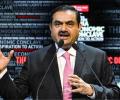
The market capitalisation of Adani Group companies rose by nearly Rs 73,000 crore on Monday as investors lapped up shares of the power-to-port conglomerate after BJP's electoral wins in three states, spurring hopes of regime continuity at the Centre. The Gautam Adani group's market map once again neared the Rs 12-trillion mark, following sharp gains made over the past week. "Two big overhangs for the Adani Group have receded somewhat following the state election results, there is more certainty that the BJP will win a third time next year.

The Securities and Exchange Board of India (Sebi) may allow non-resident Indians (NRIs) and Overseas Citizens of India (OCIs) greater exposure to domestic equities if their investments are sent through foreign portfolio investors (FPIs) registered at the GIFT City International Financial Services Centre (IFSC). The proposal will be taken during Sebi's board meeting on Saturday along with other key agenda items such as easing of voluntary delisting mechanism and introduction of a regulatory framework for real estate fractional ownership platforms, said people in the know. At present, the combined holdings of NRIs and OCIs in a global fund have to be less than 50 per cent, while that of a single NRI or OCI is capped at 25 per cent.

Higher valuation creation in companies beyond the top 100 has given the domestic markets a shot at a $4 trillion market capitalisation (mcap) - a club exclusive to three countries currently. On November 23, the mcap of all BSE-listed stocks finished at a new record of Rs 328.33 trillion ($3.94 trillion), despite the benchmark indices ending with losses. The mcap was propelled by gains in the broader market, including small and midcap stocks - a trend dominant this year.

The Federal Retirement Thrift Investment Board's (FRTIB), one of the US government's main retirement funds, decision to change the benchmark index for gaining international exposure will channel $3.6 billion (Rs 30,000 crore) inflows into domestic equities. India has a weightage of 5.3 per cent, seventh-most in the new MSCI ACWI IMI ex USA ex China ex Hong Index, which FRTIB now plans to use. India isn't part of the current developed markets-dominated MSCI EAFE index that the pension fund uses.

The contribution from asset management companies (AMCs) has surpassed the Rs 3,000 crore target for the creation of a Rs 33,000 crore backstop facility for debt mutual funds (MFs). The initial corpus for the Corporate Debt Market Development Fund (CDMDF) is nearly Rs 3,100 crore, according to multiple government officials and AMC executives. "The fund is operational now. "The required corpus has been raised by AMCs and the remaining part (Rs 30,000 crore) is in the form of a guarantee from the government which will be activated only in case of a credit event," explained D P Singh, joint CEO and deputy MD, SBI MF.
 © 2026 Rediff.com - Investor Information - Advertise with us - Disclaimer - Privacy Policy - Sitemap - Feedback - About us - Terms of use - Grievances